Which bank is which
Buda and Pest: Which Side Is Which?
Buda is the hilly west bank of the Danube and Pest the flat east bank. How they differ, how they became one city, and how to see both from the water.
Check dates and availability ↗Quick answer
Buda is the hilly west bank of the Danube in Budapest. Pest is the flat east bank, where the Parliament stands. They were separate towns until 1873, when they joined with Óbuda to form Budapest. The best way to see both banks at once is from the water. The dinner cruise boards on the Pest side and adds dinner, live folk music and a folklore dance show over about an hour and a half.
Buda and Pest at a glance
| Buda | Pest | |
|---|---|---|
| Bank | West | East |
| Ground | Hills and terraces | Flat plain |
| Known for | Castle, Citadella, baths | Parliament, Opera, Andrássy Avenue |
| Share of city | About a third | About two thirds |
Which side is Buda and which is Pest?
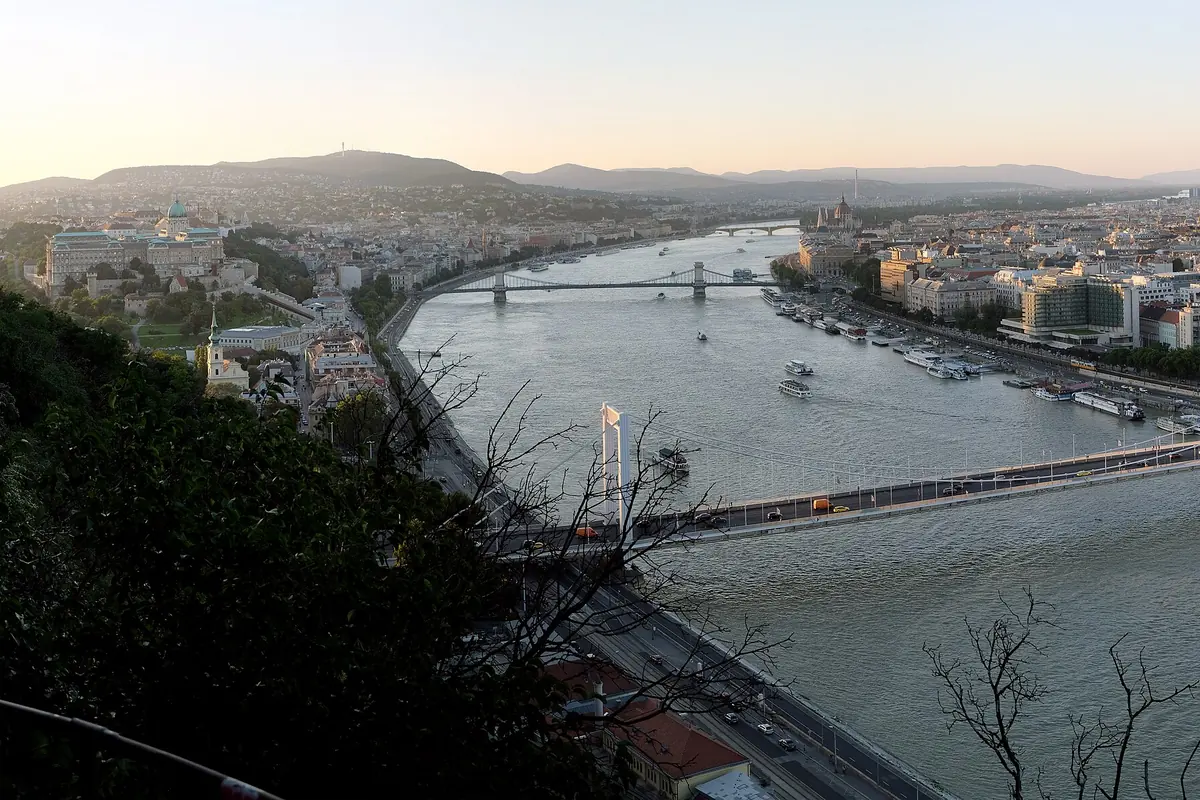
Buda is the west bank of the Danube and Pest is the east bank. A quick way to remember it: the Parliament, the Opera and Andrássy Avenue are in Pest, while the castle on its ridge, the Citadella on Gellért Hill and the Buda Hills are in Buda. The two halves also differ in shape. Buda is built on the higher river terraces and hills of the western side. The larger Pest spreads across a flat plain on the opposite bank. The Danube runs between them through the heart of the city, and the bridges are what tie the two halves together.
Buda and Pest side by side
The table sums up the difference. In everyday Hungarian, Buda often means the whole hilly west side, which covers about a third of the city's area, much of it forested. Pest makes up about two thirds. Most of the busy centre lies on the Pest side, including the Inner City, the Opera, the Great Market Hall and Heroes' Square. On the Buda side you find the Royal Palace, Matthias Church, the Citadella and the Gellért Baths. Neither bank is the real Budapest. The city is both, and the river is the line between them.
Where the names come from
The origins are not settled. A medieval chronicle links the name Buda to Bleda, the brother of Attila, who is said to have been thrown into the Danube. Another view derives it from a word for water, tied to the Roman name Aquincum, which means place of water. For Pest, one explanation is a Slavic word meaning oven or cave, perhaps for a cave where a fire once burned. In Roman times the settlement on the east bank was called Contra-Aquincum, across the river from Aquincum, in what is now Óbuda. The spelling Pesth was used in English into the early twentieth century, but it is now considered archaic.
How three towns became one city
For most of their history Buda and Pest were separate places, and a third town, Óbuda, lay upstream. Pest was an independent city in the Middle Ages. In 1838 the Danube flooded it and damaged or destroyed most of its buildings. The Széchenyi Chain Bridge opened in 1849 as the first permanent bridge in the Hungarian capital. In 1873 Buda, Pest and Óbuda were officially unified under the name Budapest, which joins the first two. Before that, the towns together were sometimes called Pest-Buda in everyday speech.
Read next: The Bridges of Budapest: A River History
Reading the two banks from the water
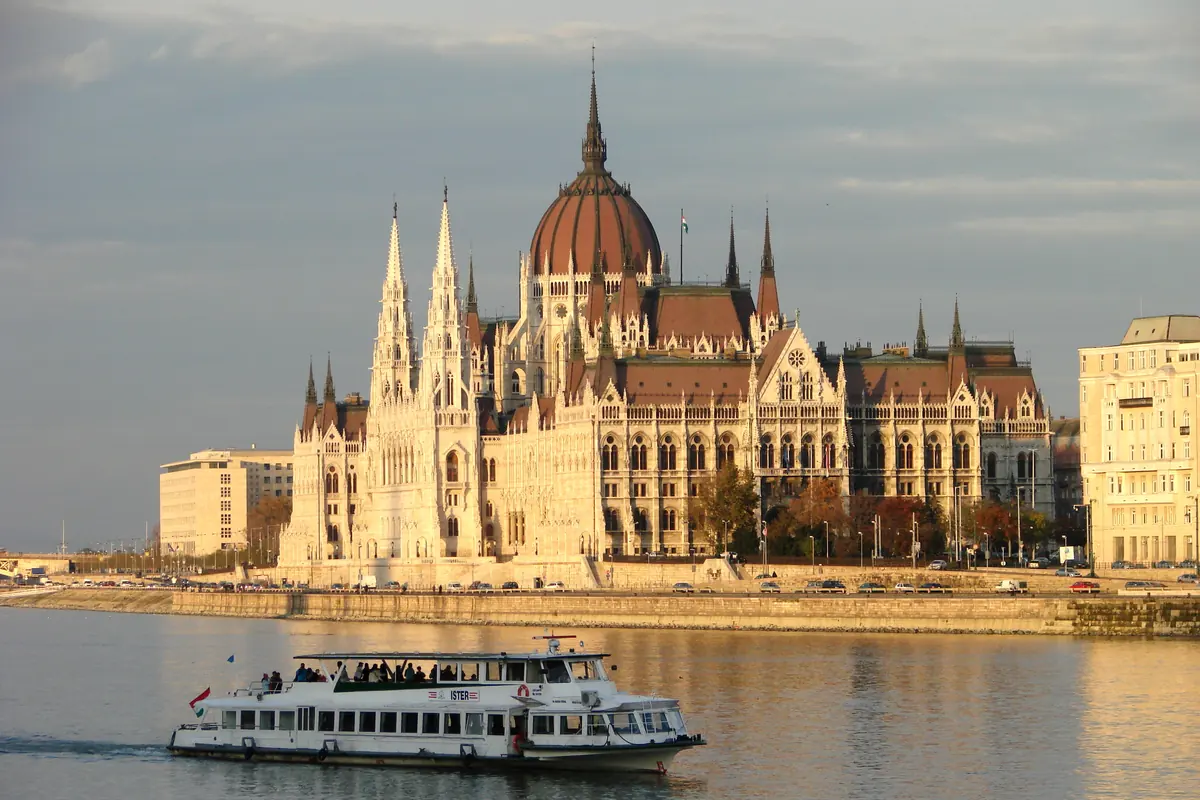
From a boat in mid-river you see both banks at once. On the Pest side the Parliament runs along the embankment. Imre Steindl designed it in neo-Gothic style, it opened in 1902, and it has been the largest building in Hungary since it was finished. On the Buda side the Castle District sits on its ridge, with Gellért Hill beside Liberty Bridge. Budapest's official tourism site says the view is even better from a boat on the Danube. The bank between Margaret Bridge and Liberty Bridge has been part of the World Heritage listing since 1987.
The bridges tell you where you are
The bridges are the easiest way to keep your bearings. From north to south the central ones are Margaret Bridge, the Széchenyi Chain Bridge, Elisabeth Bridge and Liberty Bridge. The Chain Bridge joins Széchenyi Square on the Pest side to Adam Clark Square on the Buda side, near the lower end of the Castle Hill funicular. Elisabeth Bridge runs straight into the foot of Gellért Hill on the Buda side. Liberty Bridge ends at Gellért Square, beside the Gellért Baths on the Buda side, and at Fővám Square on the Pest side, where the Great Market Hall stands.
Margaret Island and Óbuda Island
The Danube in Budapest also holds islands. Margaret Island lies between Margaret Bridge and Árpád Bridge. It is about 2.5 kilometres long, mostly parkland, and popular for walking and sport. It is named after Saint Margaret, the daughter of King Béla IV, who lived in a convent there, and medieval ruins still stand on it. Car entry has been limited since the 1980s. Further north, Óbuda Island lies beside the district of Óbuda, one of the three original towns, and hosts the Sziget Festival. The sights named for this cruise are the Parliament, the Chain Bridge, Buda Castle and Fisherman's Bastion, so the islands are not among them.
Ways to see both banks
You have several options. Walking over the bridges costs nothing and puts you on one shore at a time. Budapest's tourism site says that holders of some city cards can join a free sightseeing cruise, so check what card you already hold. Ordinary sightseeing boats are shorter, and some run for under an hour. They usually cost less than a dinner cruise, which adds a meal, music and a show, so you are paying for an evening and not only a view. If the view is all you want, a shorter boat does that job.
Read next: Day Cruise or Night Cruise on the Danube?
What the dinner cruise includes
This cruise is run by Hungaria Koncert Ltd. and lasts about one and a half hours. It includes the evening cruise, dinner, live music, a folklore dance show and a welcome drink. Further drinks can be bought on board. The music comes from the Rajkó Folk Orchestra and features the cimbalom, a traditional Hungarian instrument. You board at Akadémia dock 2 on the Pest side, the second dock from the Chain Bridge towards the Parliament, and you are asked to arrive at least 15 minutes before departure. The booking calendar and your confirmation show the departure time. For a dietary need, ask the provider before you travel.
Booking and cancelling
Booked through GetYourGuide, the cruise has free cancellation up to 24 hours before departure for a full refund. You can also reserve now and pay later, so nothing is charged today. This site is an independent guide and does not run the boat. The reservation, the payment and any change to your booking go through GetYourGuide and the provider. Pick your date once your Budapest plans are fixed, and check the booking page for the sailing you choose.
Who this isn't for
If you only want to see the floodlit banks, a shorter sightseeing boat does that for less. If you want a quiet dinner, note that this cruise has live music and a dance show on board. If you want a history lesson on Buda and Pest, a guided walk or a museum suits you better, because this is a dinner with a show and not a history tour. And if you want a loose evening, note that the cruise leaves at a fixed departure shown in the booking calendar.
Frequently asked questions
Is the Parliament in Buda or Pest?
The Parliament is in Pest, on the east bank of the Danube, on Kossuth Square. Buda, on the west bank, has Castle Hill and Gellért Hill.
Which side of the Danube is Buda?
Buda is the west bank. It is hilly, while Pest on the east bank is flat. The Danube runs between them, crossed by the city's bridges.
When did Buda and Pest become one city?
In 1873, when Buda, Pest and Óbuda were officially unified as Budapest. The Széchenyi Chain Bridge, the first permanent bridge in the capital, had opened in 1849.
How long is the Danube dinner cruise?
About one and a half hours. It includes dinner, live music, a folklore dance show and a welcome drink. The booking calendar and your confirmation show the departure time.
Where does the dinner cruise leave from?
From Akadémia dock 2 on the Pest bank, the second dock from the Chain Bridge towards the Parliament. You are asked to arrive at least 15 minutes before departure.
Can I cancel the cruise?
Yes. Booked through GetYourGuide, cancellation is free up to 24 hours before departure, with a full refund. You can also reserve now and pay later.
Sources